painting | about|publications | contact & newsletter


Publications / Reviews / Interviews

Creatrix Pod, presented by Claire Zakiewicz 2024

SPAM zine, Posthuman, all Too Human, by William Kherbek 2023

Lookout Cookout: An Artists’ Cookbook. Curated by David Baldry and Caroline Wiseman, 2023

Creatrix Magazine: Claire Zakiewicz Interviewed and Photographed by Chris Freeman, 2022

3am Magazine: Embodied Patterns - an interview with Claire Zakiewicz, 2022

Resonance FM: A Baroque Biennale with Claire Zakiewicz, 2022

Resonance FM: Drawing Sound and Echos, 2022

There's no way I can know it, the object of the body, Claire Zakiewicz & Sophie Seita, 2022

SPAM zine, Some Loose Assemblies, by Louis Mason, 2021

All about Jazz: Some Loose Assemblies 3 at Hundred Years Gallery, by John Eyles, 2021

Creatrix Magazine: Some Loose Assemblies 2, by John Eyles, 2021

All about Jazz: Some Loose Assemblies 2 at Hundred Years Gallery, by John Eyles, 2021

Generative Art Using Neural Visual Grammars and Dual Encoders, (acknowledgement), by Chrisantha Fernando, 2021

Staging and Re-Cycling: Retrieving, Reflecting and Re-Framing the Archive, edited by John Keefe and Knut Ove Arntzen,Chapter 18 by Gian Carlo Rossi and Jacek Ludwig Scarso (Routledge) 2020

Top Ten NYC Artists Now (Art 511 Magazine) 2019

Interviewreihe "Davon leben" - Interview mit Claire Zakiewicz, Martin Spiess 2019

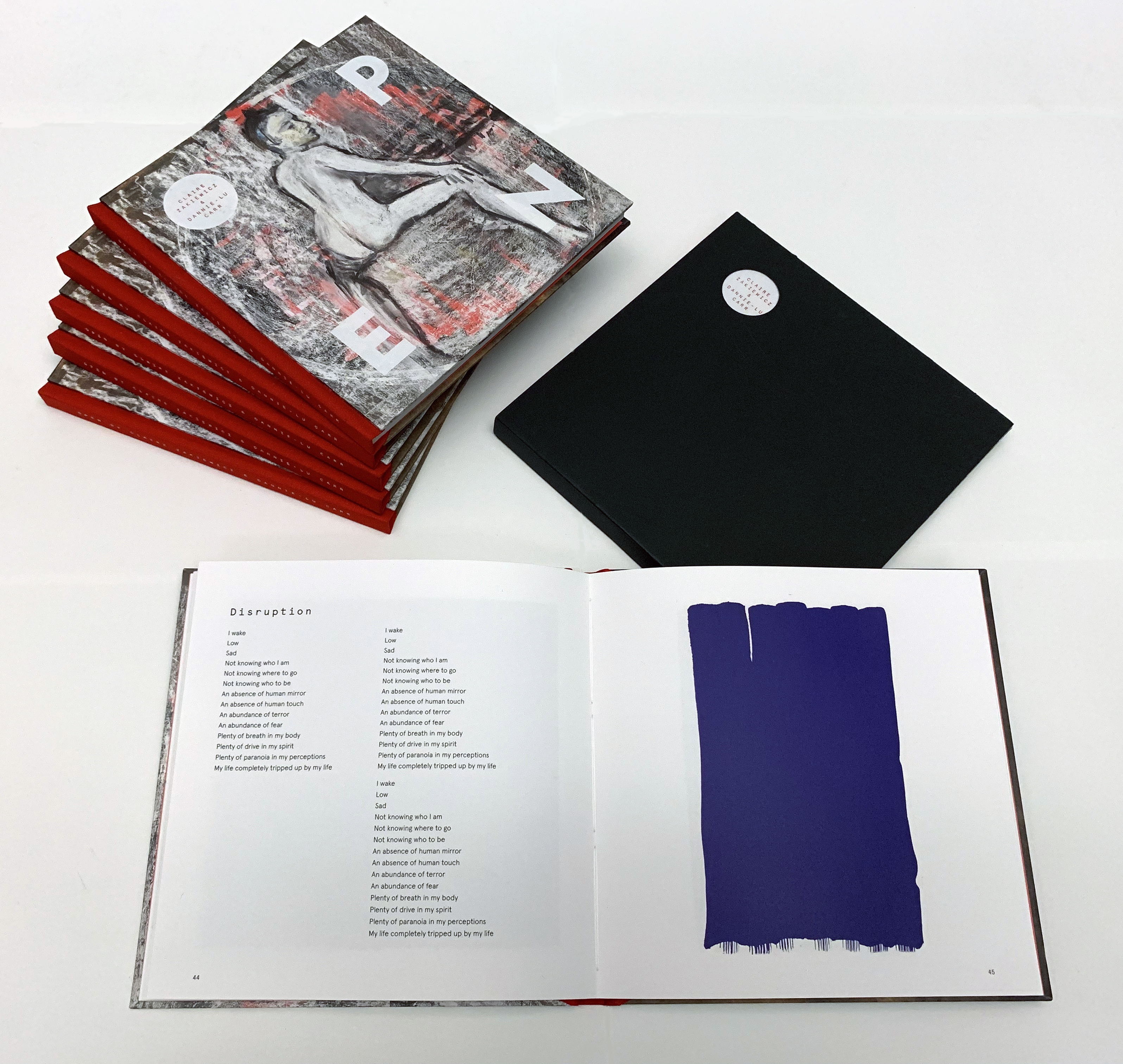
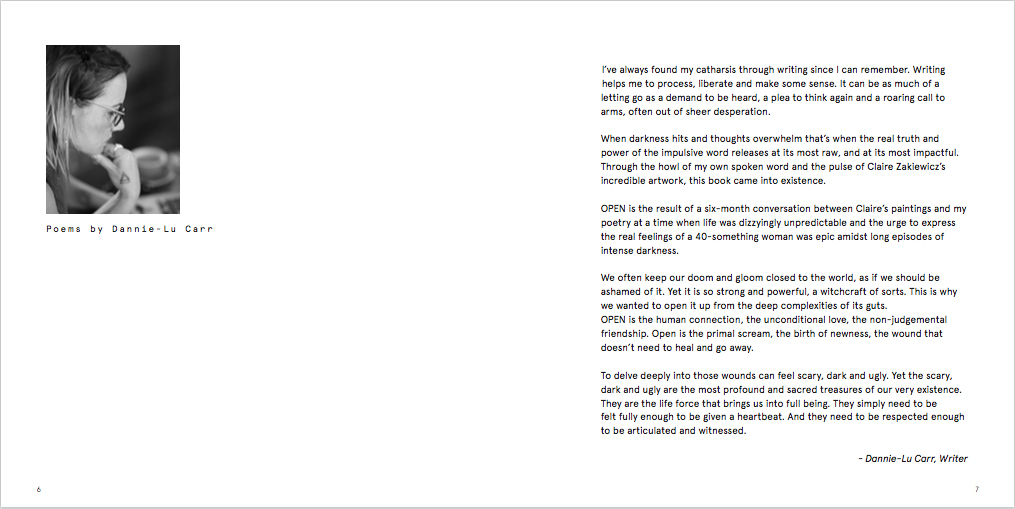
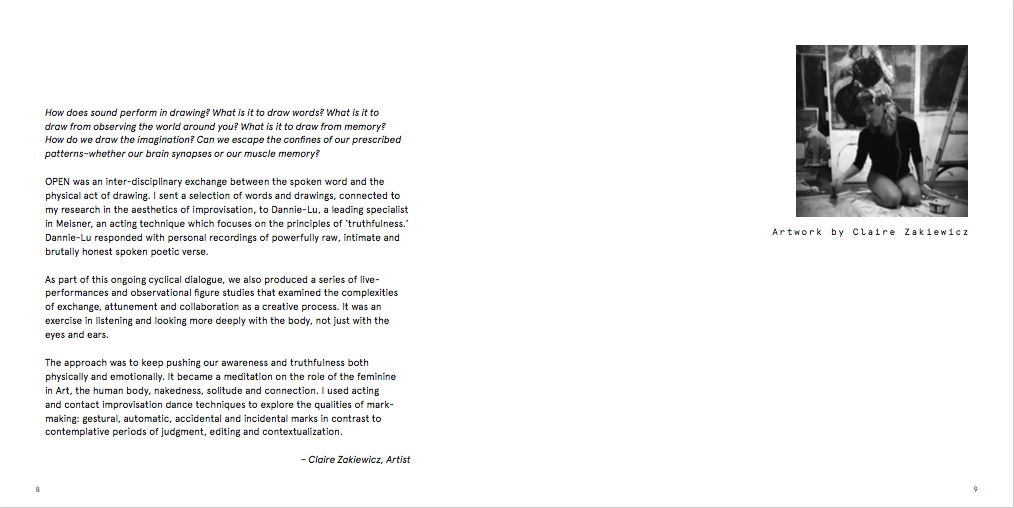
Open by Dannie-Lu Carr and Claire Zakiewicz, 2019

Struggle and Surrender: Process and Material in Painting by Elisabet Dijkstra, 2018

Hypocrite Reader: Dispatch: Art Out of the World by Lenna Pierce, 2018

Interview. with. the. artist. Claire. Zakiewicz by Cherubino, 2016

Verdure Engraved: 6 Questions by Jez Riley French, , 2016

Verdure-Engraved: Feature - Claire Zakiewicz, 2015


Writings by Claire Zakiewicz

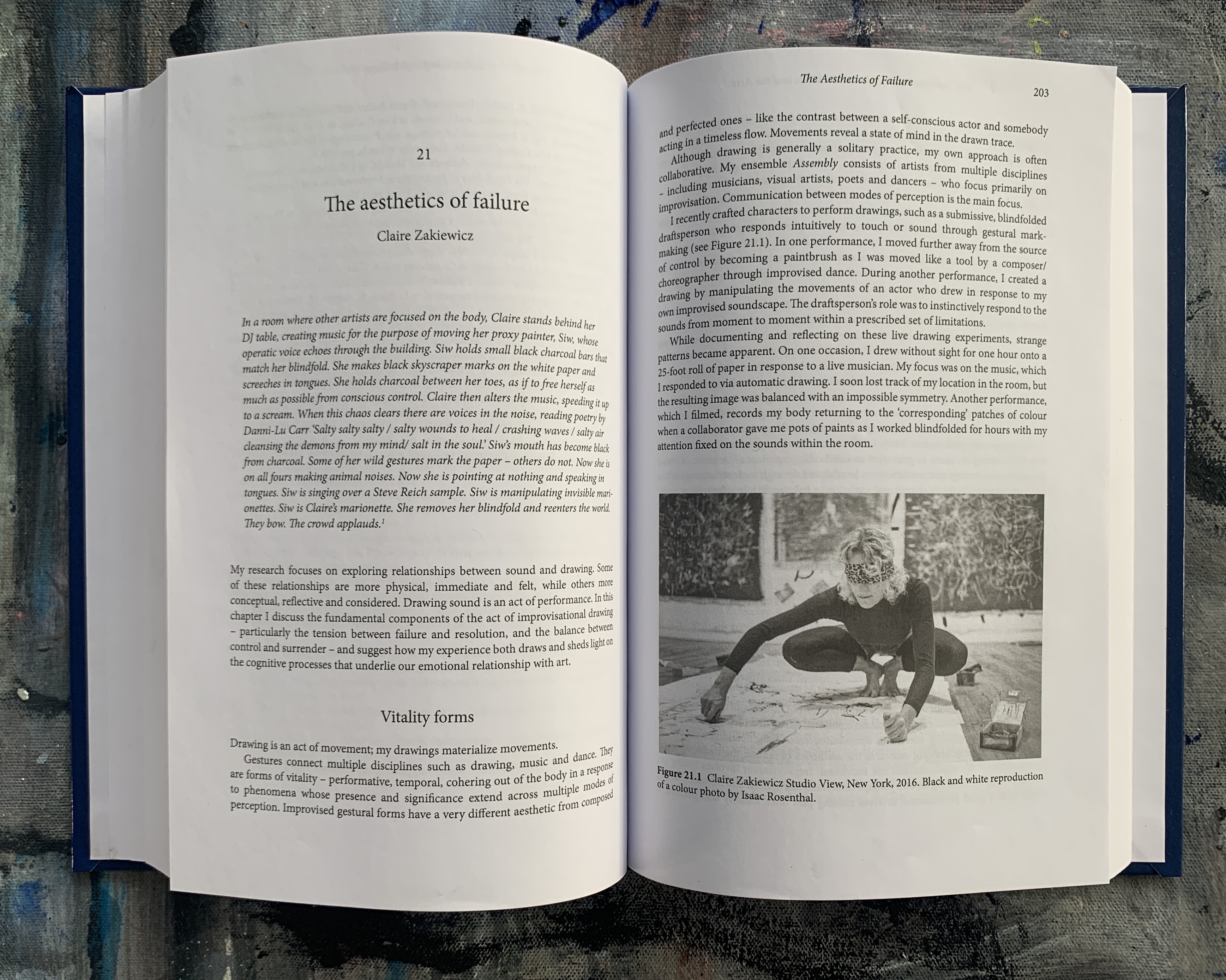
The Aesthetics of Imperfection in Music and the Arts: Spontaneity, Flaws and the Unfinished, Chapter 21 (Bloomsbury), 2020

Control Variations in Improvised Drawing Practices: A White Paper, 2019


Lenna Pierce

Dispatch: Art Out of the World


ISSUE 88 | MAGIC | JUL 2018

Let’s take a moment to remember that the symbols our brains use to communicate with us in our dreamstate are largely present to prevent us from receiving too much truth at once, and to keep us pleasantly restful. If you apply this understanding to the world of art it would make sense that the most beautiful performances might not be the most direct.

Attending the Itinerant Performance Art Festival at Last Frontier in Greenpoint, ancient meat hooks hang from the high ceilings, decorated with bells and flowers. Sungjae Lee is slathering himself with thin layers of green clay, gaining mass and wrinkles over several hours, a statement on aging I think. Cristina Silvio, dressed in unpleasant flesh colored spanks, is nailing her long brown hair to a board, a few locks at a time, until she is quite bound to it, evoking simultaneously Mary Magdalene and Jesus Christ. The trend in performance art seems to be a return to the body, the opposite of modern life, a reaction to New York.

I have come to see Claire Zakiewicz who I know to be a great world traveler, as well as an accomplished painter. These two facts together explain how she has been moving farther and farther away from her own canvas through experiments in remote painting. First, blindfolded painting took her away from conscious control. Then she made a magical pair of sunglasses taped over with white medical tape to allow her to see back into herself. During one notable performance she laid a canvas on the floor and daubed paint on blindfolded dancers who danced to my live accompaniment. Her most recent collaboration with Siw Laurent takes her even farther from the canvas.

In a room where other artists are focused on the body, Claire stands behind her DJ table, creativing music for the purpose of moving her proxy painter, Siw, whose operatic voice echoes through the building. Siw holds small black charcoal bars that match her blindfold. She makes black skyscraper marks on the white paper and screeches in tongues. She holds charcoal between her toes, as if to free herself as much as possible from conscious control. Claire then alters the music, speeding it up to a scream. When this chaos clears there are voices in the noise, reading poetry by Danni Lucar “Salty salty salty/ salting wounds to heal/ crashing waves/ salty air cleansing the demons from my mind/ salting the soul.” Siw’s mouth has become black from charcoal. Some of her wild gestures mark the paper–others do not. Now she is on all fours making animal noises. Now she is pointing at nothing and speaking in tongues. Siw is singing over a Steve Reich sample. Siw is manipulating invisible marionettes. Siw is Claire’s marionette. She removes her blindfold and reenters the world. They bow. The crowd applauds.


Struggle and Surrender: Process and Material in Painting

by Elisabet Dijkstra


It comes as a surprise at first that visual artist, Claire Zakiewicz, does not make art. She prefers to label her creative work as a practice in listening, learning and observing.

Claire and her art reside in a world called spatialised time - a wonderful place where shapes of sound, dance and drawing are related back to the material world we live in. This world exists in the crossroad between two chief species of time. Intellectual time is a purposeful sequencing of parts or events and is, therefore, affiliated with ideas composition and product. Real time, familial to ideas of improvisation and process, is the experience of these sequenced parts.

Screen Shot 2018-10-06 at 21.06.54.png

So in the land of spatialised time, Claire’s artistic house is located in a town called ‘perspectives in motion’ where the artistic system adopts a temporal focus attributable to Claire’s interest in the philosophy of the two species of time mentioned above.

In the course of one prickly affair, Claire found that the paintbrushes she was using were far to bristly and produced scanty lines - this effect was far from what she had envisaged. What does a relationship with failure look like? There are different shades of failure. Technical failure, like the brushes malfunctioning, and feeling of failure - a sense of dissatisfaction. Nonetheless, like all relationships, this one is creative. One create’s a space wherein to exist with the failure which, according to Murphy’s law, will inevitably happen.

What is worth mentioning is that failure has an important role in the element of duration. Claire resolved to refer to the whiskery brushstrokes - the technical failure - as a symbol of her emotions to the corporate shells of skyscrapers that characterised her first few weeks in New York.

Overthinking is dangerous. Claire’s approach to colour is spontaneous and usually involves picking quickly, or even asking friends to pick. Improvisation is a means of surrender, and energy is reserved for the act of becoming a character - becoming a paintbrush, for example.

Screen Shot 2018-10-06 at 21.42.58.png

Performing brush strokes is a humanistic act - it is rooted in the body.

“Follow a set of patterns, rather than have expectations”, says Claire. She finds pleasure in the surprise outcome and this is reinforced by experiments such as painting in the dark with a cellist playing in the room, or painting blindfolded among dancers and improvising poets, or painting her bear feet and dancing on paper.

Screen Shot 2018-10-06 at 21.38.22.png

Perhaps the wall between life and art crumbles when you don’t think too much. This involves a level of trust in the idea that the body knows more than the brain.

Maybe this is the big question of process : where is the end?

Then follows, when is it? What is it? Is there an end? Or must we accept the perpetual motion in life and art? Surely, we must all take note from Leonardo Di Vinci’s view that a work of art is never finished, it is abandoned.

Claire values the creative process rather than product; however, product - which connotes "finished” – is an essential part of the process. I think it is about realising the symbiosis between process and product - that the product is not the be all and end all, the process is not a smooth ride altogether.

Failure must become a friend if the artist wishes to make beauty alive and tangible in the moment.


________________________________________________________________


OPEN BY CLAIRE ZAKIEWICZ AND DANNIE-LU CARR


All content © Claire Zakiewicz
2026